Close your eyes and picture a button-down shirt.
What do you see?
If I had to guess, it’s a plain white or blue shirt in a sturdy fabric with a few wrinkles here and there. A row of shiny plastic (or mother-of-pearl) buttons runs up the front. It’s a shirt that looks just as stylish with a knit tie as it does under a sweater or with rolled-up sleeves and jeans.
You can thank over a century of marketing for the Oxford Cloth Button-Down (OCBD) being the quintessential American button-down shirt.
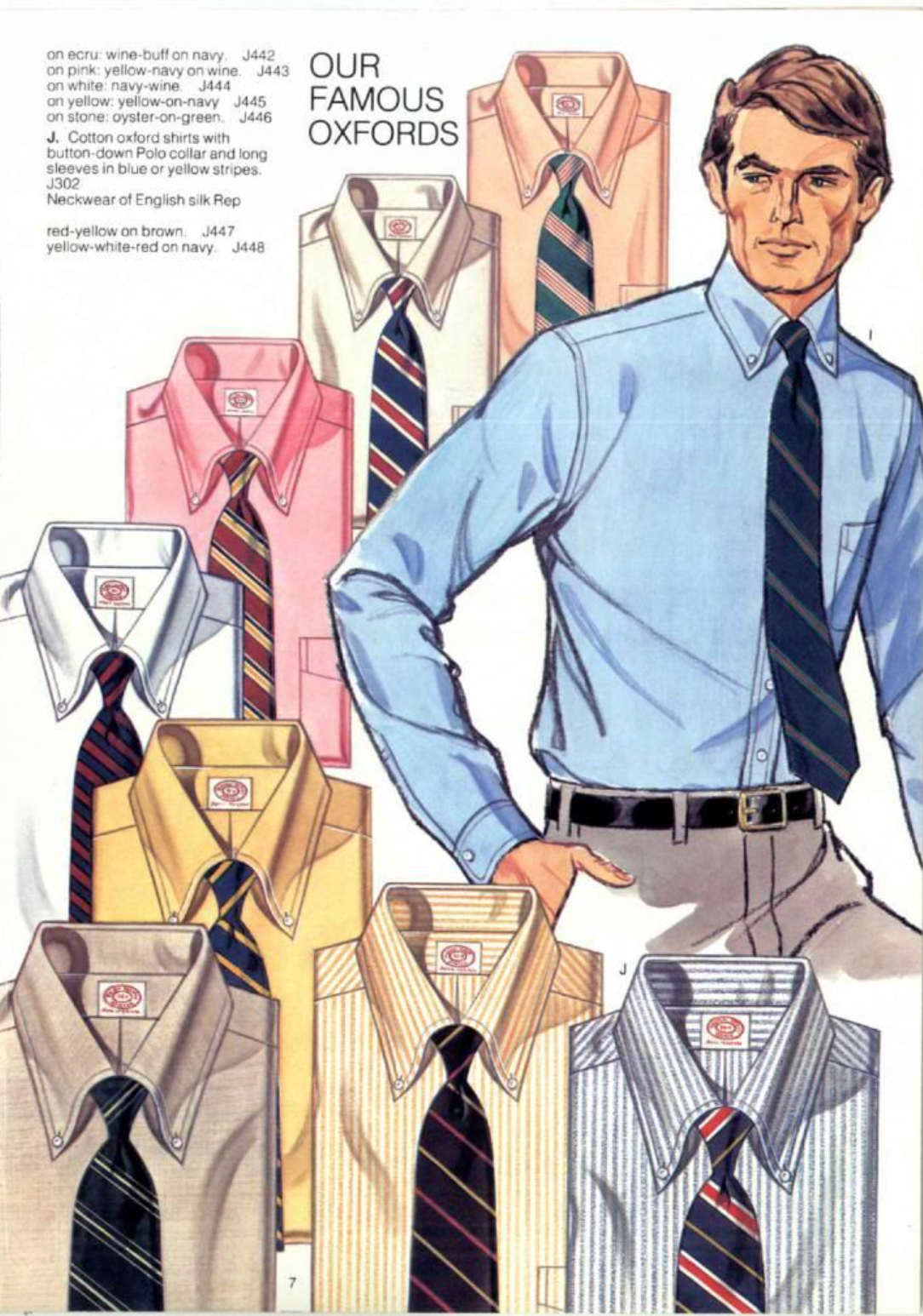
From Paul Newman and JFK to college campuses and run-of-the-mill offices, you’ll find the OCBD everywhere. And for good reason: You can dress these shirts up and down with ease; they’re just as comfortable with a blazer and chinos or jeans.
They’re incredibly versatile and one of the easiest ways to up your style without feeling like you’re trying all that hard.
That versatility is key. One of the central tenets of classic Ivy style is the idea of effortless effort. Called “sprezzatura,” this is the “studied carelessness” that the rumpled OCBD seems to capture perfectly.
The tucked-in shirt says “I’m serious,” but the wrinkles, broken-in fabric, and rolled-up sleeves say, “but I don’t care… that much.”
You’d think that with 100+ years of manufacturing history, these shirts would have been more or less figured out. So why is there so much variation between them? Some have box pleats, some have locker loops. Some have eight buttons down the front, and others have six. What is the “true” Oxford shirt?
We’ll do our best to answer that and more in this article.
Terminology
I know. It’s just a shirt, do we really need definitions? For an OCBD, yes. There are a few things I want to call out for you that make an Oxford shirt and an Oxford shirt.
- Basket-weave: An Oxford shirt is made of Oxford cloth, a basket-weave fabric which is fabric woven with a durable, textured pattern that mimics a woven basket, achieved by interlacing groups of yarns (usually two or more) over and under each other.
- Button-down vs Button-up: All button-up shirts are dress shirts that you button to close, but a button-down shirt has additional buttons to fasten the collar. This is one of the key distinctions between a button-down Oxford shirt and a regular dress shirt.
- Barrel cuff: A simple cylindrical cuff with one or two buttons (I prefer two), as opposed to a dressier French Cuff, which requires cuff links.
- Box pleat: A square pleat in the back of the shirt. The pleat sits right under the yoke of the shirt in the middle of the back for added mobility.
- Collar Roll: Being dress shirts, Oxford shirts often have collars that can accommodate a tie. Because OCBDs are also casual, the collars are unstructured so that without a tie, the collar should drape nicely around the neck and bottom of the face, giving a distinctive rolled-over appearance.
- Unfused collar: Just as important as lengthy collar points is the unfused collar. Collars can either be fused in place (heated with glue to form a straight and smooth collar) or unfused (sewn with fabric in between the layers). An unfused collar is flexible and gives the Oxford shirt it's signature flexible collar and collar roll.
These are essential components of an Oxford shirt. Without them, and the others I share later, it’s just a button-down shirt.
What is an Oxford Shirt?
At a bare minimum, Oxford shirts are a type of men’s dress shirt, meaning they must have a collar, cuffs, and a full-length button-fastened opening at the front.
But there’s a world of difference between a classic OCBD and a dress shirt you’d wear to a formal wedding.
As mentioned above, dress shirts can be classified as “button-ups” and “button-downs.”
A button-down shirt includes buttons at the end of the collar to fasten the shirt in place, while a standard button-up shirt does not:


Okay… But What Makes an Oxford Shirt an Oxford Shirt?
So it’s a button-down shirt – well, could you have an OCBD made of flannel? Or silk? Or brushed twill?
Not so fast. There are countless opinions on what makes an Oxford shirt an Oxford shirt, so with a dash of humility, here is what I suggest:
- The fabric: Oxford cloth has a distinctive basket weave texture that's thicker and more textured than typical dress shirt fabrics like broadcloth or poplin. It's durable, slightly rough to the touch, and has a casual, lived-in quality even when new. This fabric breaks in with wear and develops a beautiful patina with age.
- The collar: The defining feature is the unfused button-down collar with small buttons that fasten the collar points to the shirt front. This was originally a polo shirt detail (to keep collars from flapping during matches) that Brooks Brothers adapted for dress shirts in the 1900s.
- The style: OCBDs sit in that perfect middle ground between casual and dressy. They work with a suit but also with jeans. While it’s dressy when tucked in, the box pleat provides movement, and the collar roll gives a distinctive “I don’t care” coolness.
- Common details: Most have a small fabric loop on the back (locker loop), a box pleat in back for movement, and that characteristic relaxed, slightly rumpled appearance that actually improves with wear and washing.
Later, I’ll share my non-negotiables for what to look for in an Oxford shirt. For now, a bit of history.
A Brief History of the Oxford Shirt
Here’s the story of the OCBD told in three acts:
- Origins
- Evolution
- Today
The Origins of the Oxford Shirt
If you believe the legend, John E. Brooks of Brooks Brothers attended a polo match in England and noticed something unusual about the players’ shirts: their collars were fastened with buttons, preventing the collar points from flapping during the match.
Whether or not that is true, Brooks Brothers earned its fame for being one of the first retailers to mass-produce high-quality clothing that the average person could wear off the rack. Prior to this, fine clothing was only accessible to the upper classes, who had bespoke clothing made for them.
While Ivy has taken its lumps with elitist and preppy connotations, it originally began as an accessible way for those of the middle and lower classes to “dress the part” of the upper class and fit in.
Why “Oxford” though?
Oxford cloth gets its name from Oxford College. The college only lent its name; in the latter half of the 19th century, a Scottish textile mill created different weaves of cloth and, for marketing purposes, named them after famous universities. There were Oxford, Cambridge, Yale, and Harvard weaves. Today, Oxford wins out while the rest have fallen to the wayside.
The Evolution of the Oxford Shirt
The OCBD can thank Ivy League style and school uniforms for its popularity.
By the 1950s, Ivy League students had adopted the OCBD as their own. Students purchased the burly shirts and would even scuff them up with sandpaper to achieve the exact worn-in look they needed to fit in.
Match an Oxford shirt with a tweed jacket, knit tie, flannel trousers, and Bass penny loafers and you fit the part on most college campuses – if you knew the college’s exact way of doing things, that is. Each campus had its own unique twist on the classics, which allowed Ivy to evolve and change throughout the 1940s and 1950s. With the end of WWII and the flood of new students attending college thanks to the GI Bill, standard issue officer chinos were thrown into the mix, and Ivy as we know it today was more or less born.
This casual yet polished style worn by the East Coast elite soon reached the West Coast. Famous actors such as Steve McQueen, Paul Newman, and Robert Redford embraced this new way of dressing on and off screen, elevating it to the height of cool.
The Oxford Shirt Today
After WWII, Japan rebuilt its economy, culture, and infrastructure. A big part of that centered on an embrace of American fashion to rebel against traditional norms in Japanese society. Clothing brands popped up in Japan in response to this new interest, and envoys went to America to study American culture and fashion on college campuses.
To codify the “Ivy League” style, the book Take Ivy was written and distributed to help Japanese teenagers take part in the new Ivy revolution (check out the book Ametora for a deeper dive into this!).

Thus, the humble and somewhat plain OCBD that was on its way out in America got new life in Japan, and has ebbed and flowed in the fashion universe since.
You won’t find Oxford Cloth Button Downs on college campuses these days. Not at the rate you would have 100 years ago, at least. But Ivy and prep enthusiasts and office workers alike agree that in the classics, you really can’t beat a good OCBD.
And today, you have more choices than ever to find one.
You have slim and oversized. Cotton and polyester. Full-length and untucked. There is no one true Oxford shirt, which in one way is nice, as you have more options than ever to choose the right shirt for you… but also leads to a challenge. After all, when there are dozens of options out there, which one is best?
What Makes a Good Oxford Shirt
Ask 10 different people (who care), and you’ll get 10 different answers. Such is the beauty of opinions on such a divisive topic.
I’m not the head of the Oxford police. I’m not quite the stickler for tradition, and the hardcore Oxford aficionados will probably say my opinion is full of bunk.
But we need standards. An Oxford shirt must be distinct from other shirts, so here’s what I’d suggest makes a good one:
- Durable basket-weave fabric: This is key and a non-negotiable. An Oxford cloth button-down is made of… Oxford cloth. The heavyweight basket weave is one of the hallmarks of a good Oxford shirt.
- 100% cotton: We have enough plastic floating around the oceans and our own bloodstream; I don’t need to drape myself in plastic as well. No polyester or nylon in my Oxford shirts, please.
- A collar roll: I don’t care for giant collars (more on this further down), but you need a defined collar on the shirt otherwise it looks out of proportion. Modern Oxford shirts almost seem to apologize for needing a collar, but a true Oxford shirt wears its collar and collar roll proudly.
- A box pleat in the back: Again, this is a dress shirt, so why kill its character in the effort to dress it down? A box pleat calls back to the shirt’s history as athletic wear by providing mobility and ease of movement.
- A locker loop: Locker loops aren’t exactly required… but they’re a fun detail. Fun fact: at some colleges, young women would clip the locker loops of their boyfriend’s shirts to signify that their men were taken.
- A roomy fit: You don’t need a billowy shirt a la Jerry Seinfeld’s pirate shirt (below), but the classic OCBD was never designed to be skin-tight. I like a shirt that fits the shoulders nicely and goes straight down. Bonus points for two pleats in the wrist for added room in the arms so you can raise them over your head without pulling your shirt out of your waistband.
And here are my controversial opinions:
- It needs to be tucked: It’s a dress shirt. Dress shirts are meant to be tucked. In my experience, there are two things to bear in mind when tucking in your shirt if you don’t want to look like Dilbert:
- Wear pants with an appropriately mid-high rise. A tucked shirt into low-rise pants looks terrible every time. The higher the rise, the more in proportion your top half will look when tucked.
- Layer. Seriously, add a layer, whether it’s a chore coat or jacket, it will elevate the blandest white shirt with khakis into something that looks old-school cool.
- The collar roll is overrated: Hear me out. You’ll see folks online (especially Reddit) demand that the collar be at least 3 inches, and anything shorter is not enough. I don’t buy it. If you want a big collar roll or a relatively small collar roll, it’s all a matter of personal preference. If you ask me, 2.75” is perfect.
- Break your own shirts in:
How to Style an Oxford Shirt
Take a walk through the catalogues of old, and you’ll see Oxford Button-Downs dressed up with a tie, blazer, and chinos or light-wash jeans, even for a stroll on the beach. Below are some of my favorite ways to style an OCBD.
What to Wear With an Oxford Shirt
Just take a look below for some inspo on how an Oxford shirt can be styled:
Classic Ivy
Paired with chinos and boat shoes

Paired with a blazer
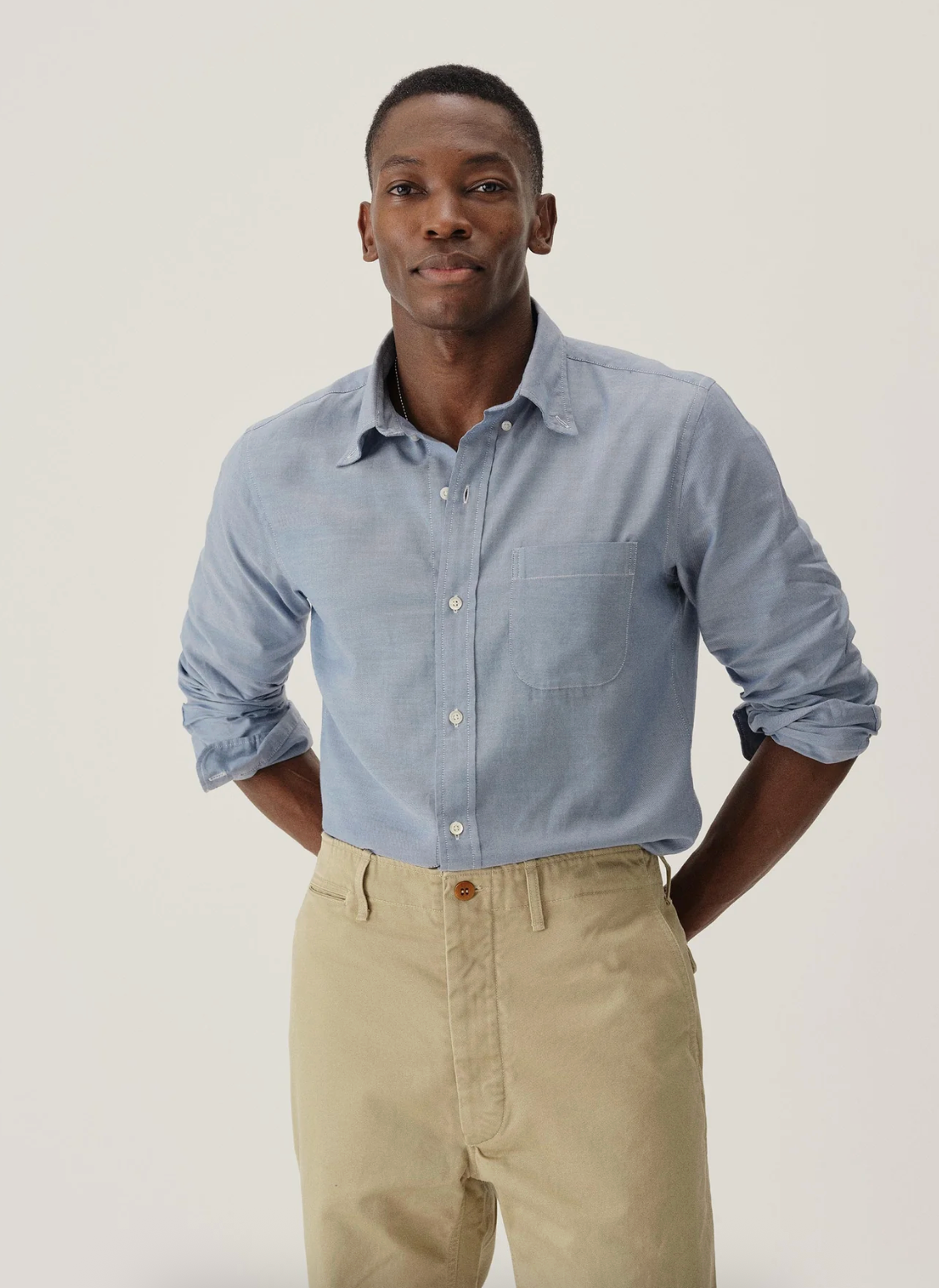
From Buck Mason
Casual and Workwear vibes

Dressed down with an over-shirt and jeans

How Should an Oxford shirt fit?
Look, I’m not about to tell you how to wear your clothes. It’s a free country, and fit is entirely subjective and subject to trends.
In the 2010s, “slim” was all the rage. The paragon of men’s fashion was skinny jeans and a slim button-down so restrictive that all you had room for was to keep your arms straight against your body at all times.

In the 2020s? Giant fit is all the rage with pants and shirts so large you could have a tailor make a second one from the existing material should we swing back to slim fit.

If you ask me, I like my clothes to fit. Period.
I’m much more about being stylish than fashionable. Being fashionable requires keeping up with the trends, while being stylish is about knowing what looks good and fits your body well.
I’m not going to pretend that the 1920s, 1950s, or 1980s were some kind of fit-agnostic paradise. Fit was just as part of the fashion trend then as it is now.
But over the years, the concept of a straight, classic fit has endured. It’s sometimes too baggy compared to the trend, and sometimes too tight, but it always looks good.
A shirt should fit so the seams rest on the outer edge of your shoulders, and continue straight down through the body with a slight taper towards the waist. Not too tapered, otherwise you’ll restrict arm movement. About those arms: my favorite Oxford shirts have double-pleats in the wrists, so the arms are nice and roomy. I work out quite a bit, and even though I’m not a bodybuilder, I find many modern slim fits are far too restrictive in the arms and shoulders, which makes shirts uncomfortable.
My favorite Oxford shirts are thrifted from the 1990s. They retain some of the oversized vibe of the 1980s with a dash of modernity as the zeitgeist swerved into skinny fits in the 2000s.
Why Do We Care About This So Much? We’re On a Mission to Make the Perfect Oxford Shirt
Why put in all this effort over a dress shirt?
It’s not the heritage or story of the Oxford shirt as much as what it stands for: a durable, hard-wearing piece of clothing that is designed to be a part of your life for many years to come. Oxford shirts were produced at a time when clothing manufacturers designed clothing to be broken in over years and years of wear.
The original Oxford shirts were the anti-fast fashion. Durable. Made with solid craftsmanship. As an avid thrifter, I can’t tell you how many shirts I come across from the 1980s to the 2000s that are in impeccable condition and hold up much better than new shirts manufactured today.
That’s why I started this website: to find the perfect Oxford shirt and see if we can bring it back. I’m learning quite a bit about the history of men’s fashion and clothing manufacturing in this process, and invite you to join me on this quest.
I plan to update this website with reviews of my best thrifted finds along with modern shirts to see what makes a great Oxford shirt great. Then, I’m going to see if we can make a new shirt that embodies everything that made shirts of the past so long-lasting and high-quality.
Join the Quest!
Fill out the form below to sign up for our newsletter for updates as we create the perfect Oxford shirt.
Oxford Shirt Inspo Through the Years
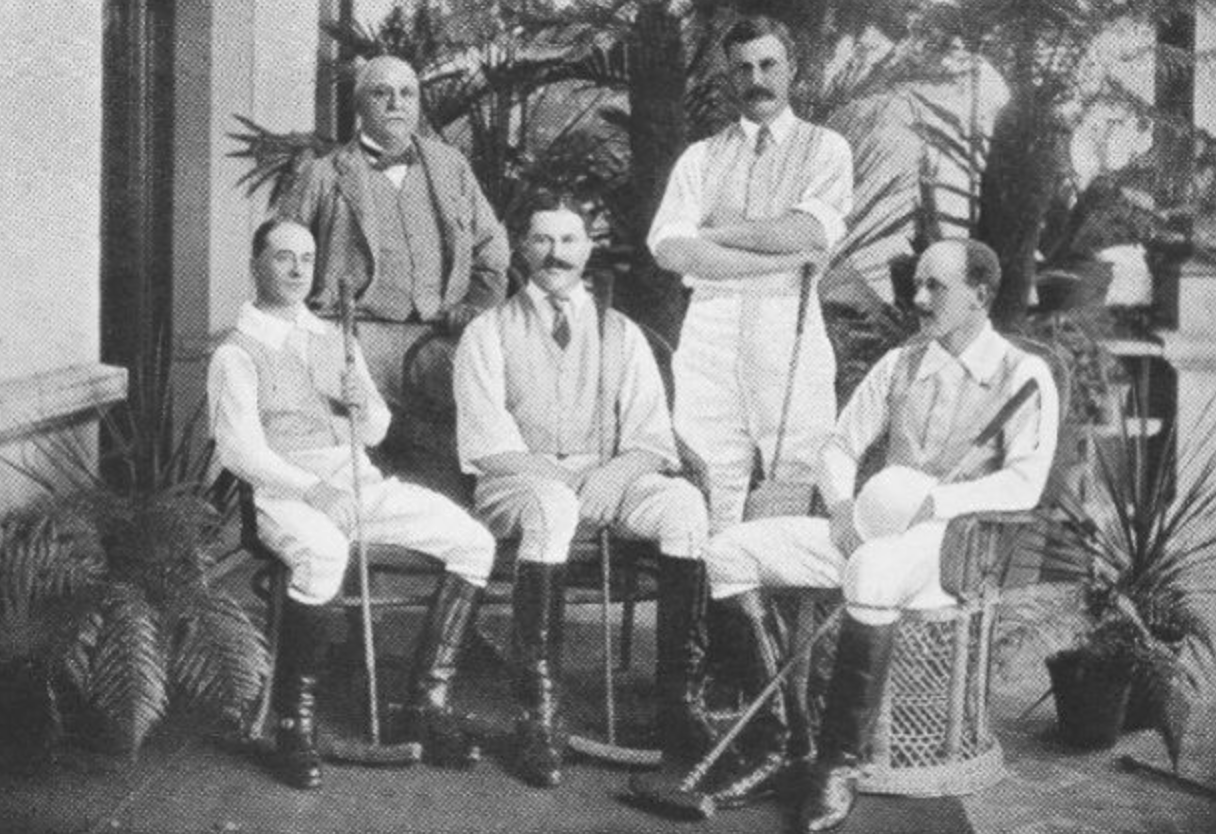
The OG polo players

Miles Davis
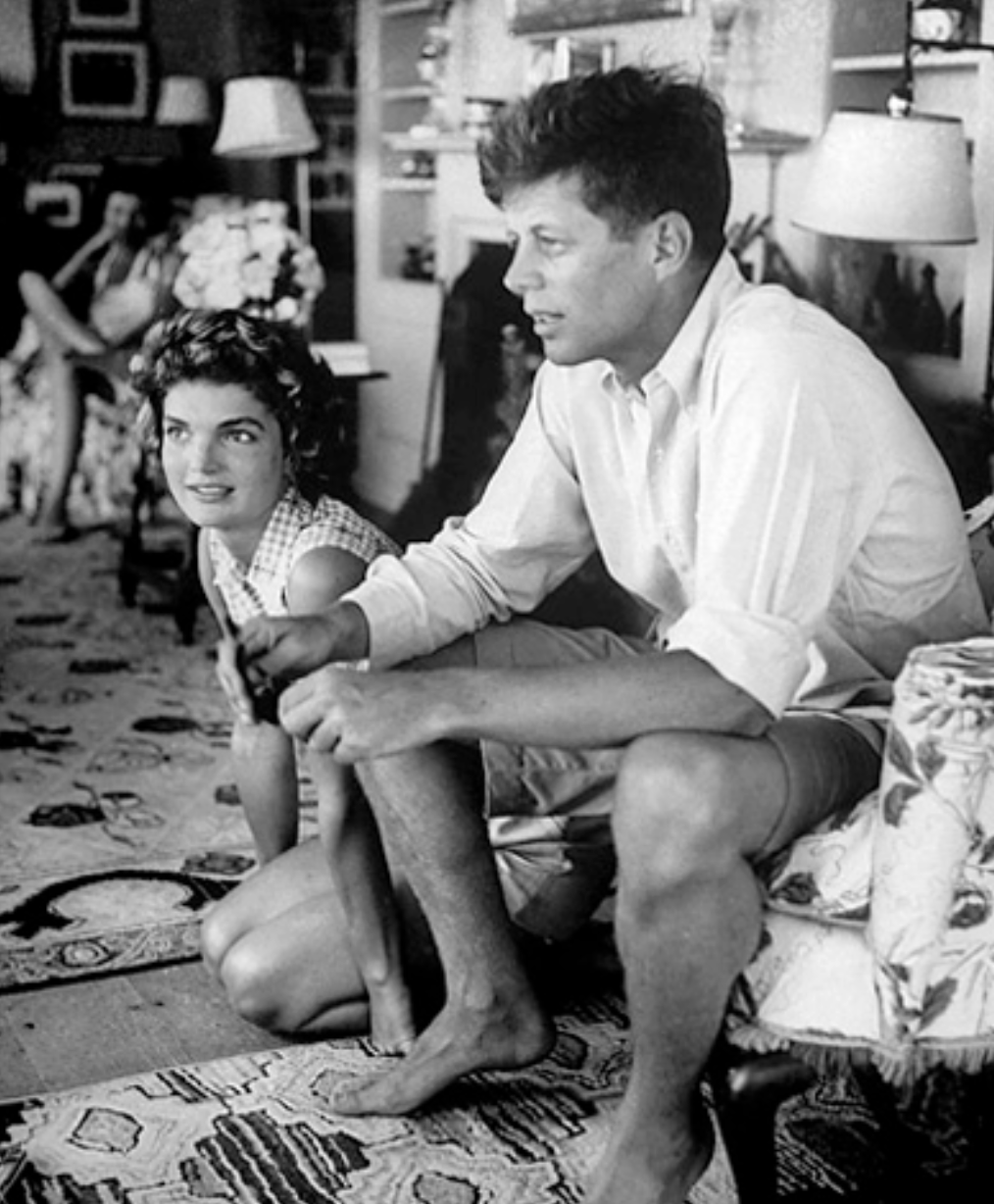
JFK

Fred Astaire

Robert Redford
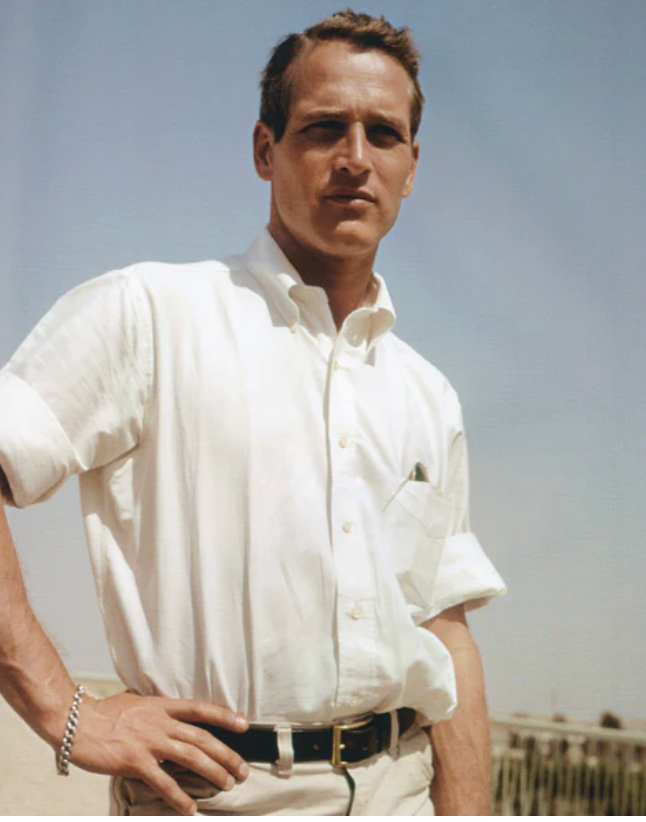
Paul Newman