If there’s a shirt in my closet that wins the “most surprisingly loved find at a thrift store,” it’s the Trader Bay Oxford shirt.
As my wife loves to say, you don’t go into the thrift store looking for anything in particular. You let the thrift store tell you what you need. In this case, it was a mass-produced shirt from Sears somewhere in the 1990s.
Is it the absolute best shirt in the world? Not quite. Is it one of my favorite thrifted shirts? You bet. Read on to see why.
Trader Bay Background
Trader Bay is a now-defunct in-house brand from Sears. Sears launched the brand in the mid-1990s and then promptly shuttered it in the early 2000s in favor of newer private-label lines like Covington.
Under Trader Bay, Sears sold classic button-down shirts, jazzy 90s patterns, and even made-in-the-USA sweaters. Here’s a sample of some offerings I found on eBay:
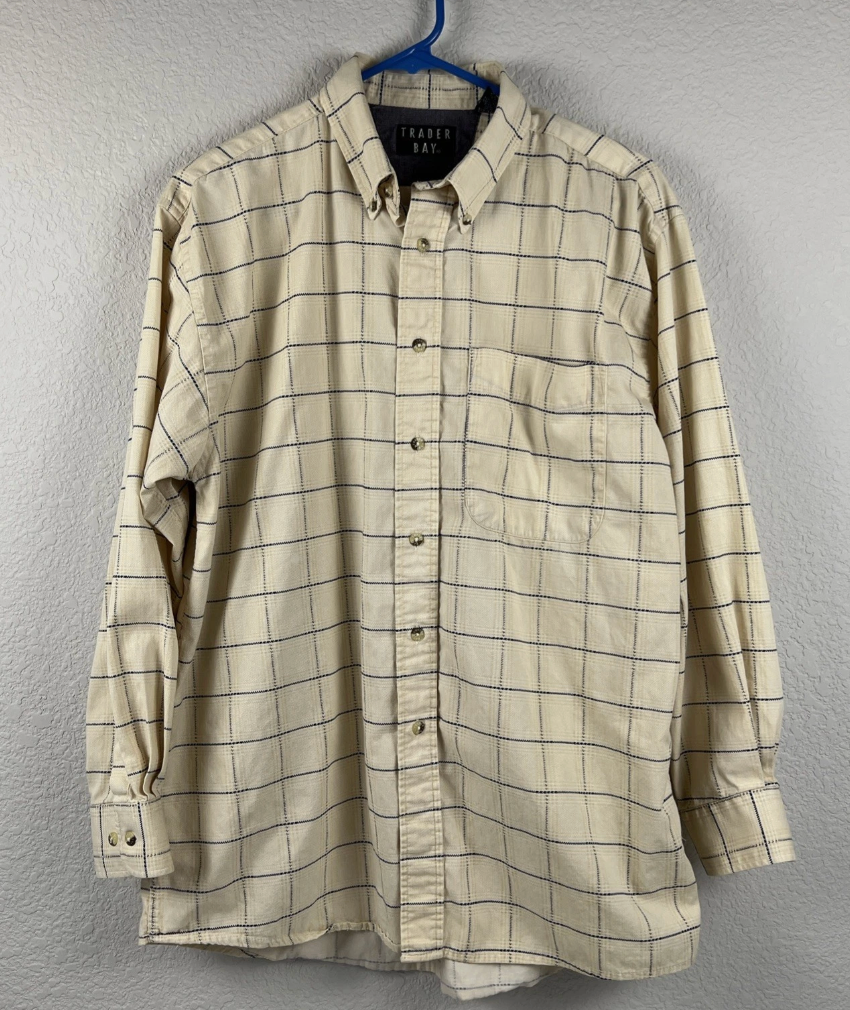
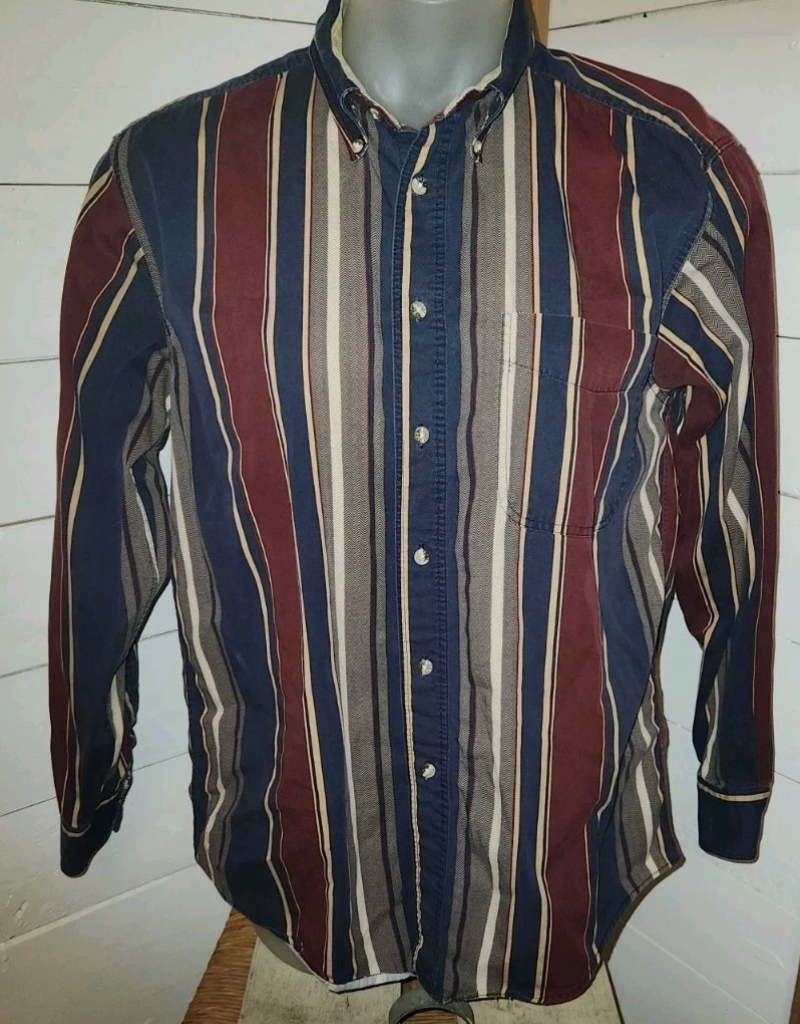
Yeah, I can imagine Jerry Seinfeld and George Costanza rocking those. For the time, Trader Bay was a run-of-the-mill department store brand with basic construction and decent materials. As you’ll see, some aspects of the shirt I picked up leave something to be desired, but don’t let that sway you completely. This shirt lasted 30+ years and held up extremely well, something you can’t say for modern J.Crew or Banana Republic.
Initial Impressions of the Shirt
My first impression of the shirt I’ll review below is that the fabric was much sturdier than the others on the rack. In a sea of H&M, Banana Republic, and Uniqlo button-downs, this shirt was a tank of an Oxford shirt that stood out among the rest.
I was also on the hunt for a purple university stripe shirt, so that helped pique my interest.
Upon trying on the shirt, I was surprised to see that a “Small” actually fit me quite well. As you’ll see, it fits my shoulders and chest nicely and tapers down to the waist. I put it into my wife’s cart and continued my search for anything else worth grabbing at the Savers.
Now, I’ll be clear here: this isn’t a top-quality shirt. While the construction is decent, the stitching puckers more than other vintage shirts I have that are the same age, and there are some other finer details that are desired. That said, this is a solid shirt that I was glad to keep, but read on for an in-depth review.
Trader Bay Oxford Shirt Review
Enough with surface-level impressions! You’re here for the nitty-gritty. I’m going to review this shirt from top to bottom, leaving no button or stitch unturned.
I’ll break down my review into the following sections:
- Labels
- Fabric
- Buttons
- Details and extras
- Construction
- Stitching
- Weight
- Fit
Labels
Let’s start with the label.
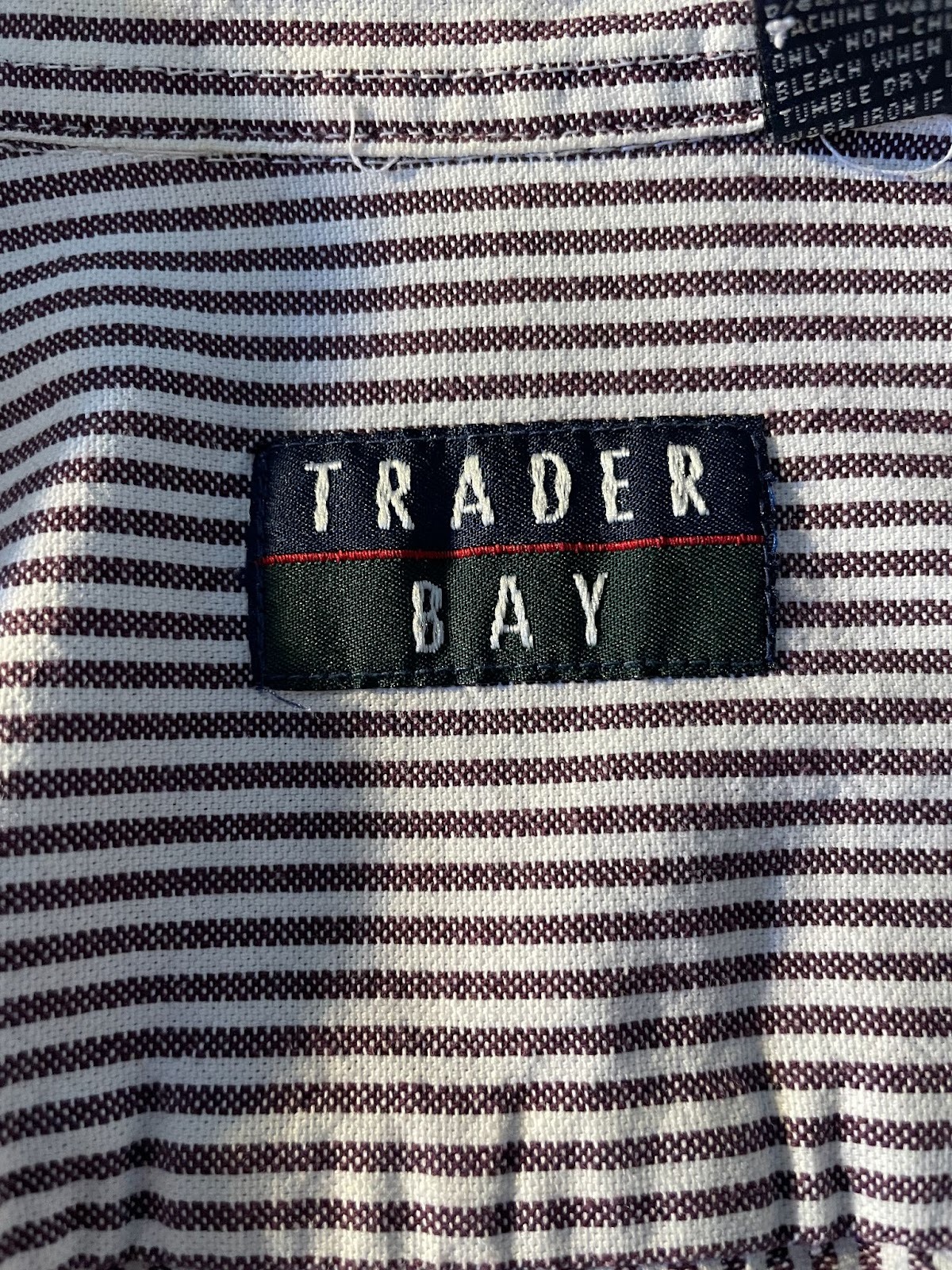
I like to pay attention to the labels on clothes. These days, everything is plastic, but in vintage clothing, you’ll see fabric labels for the logo and even the washing instructions.
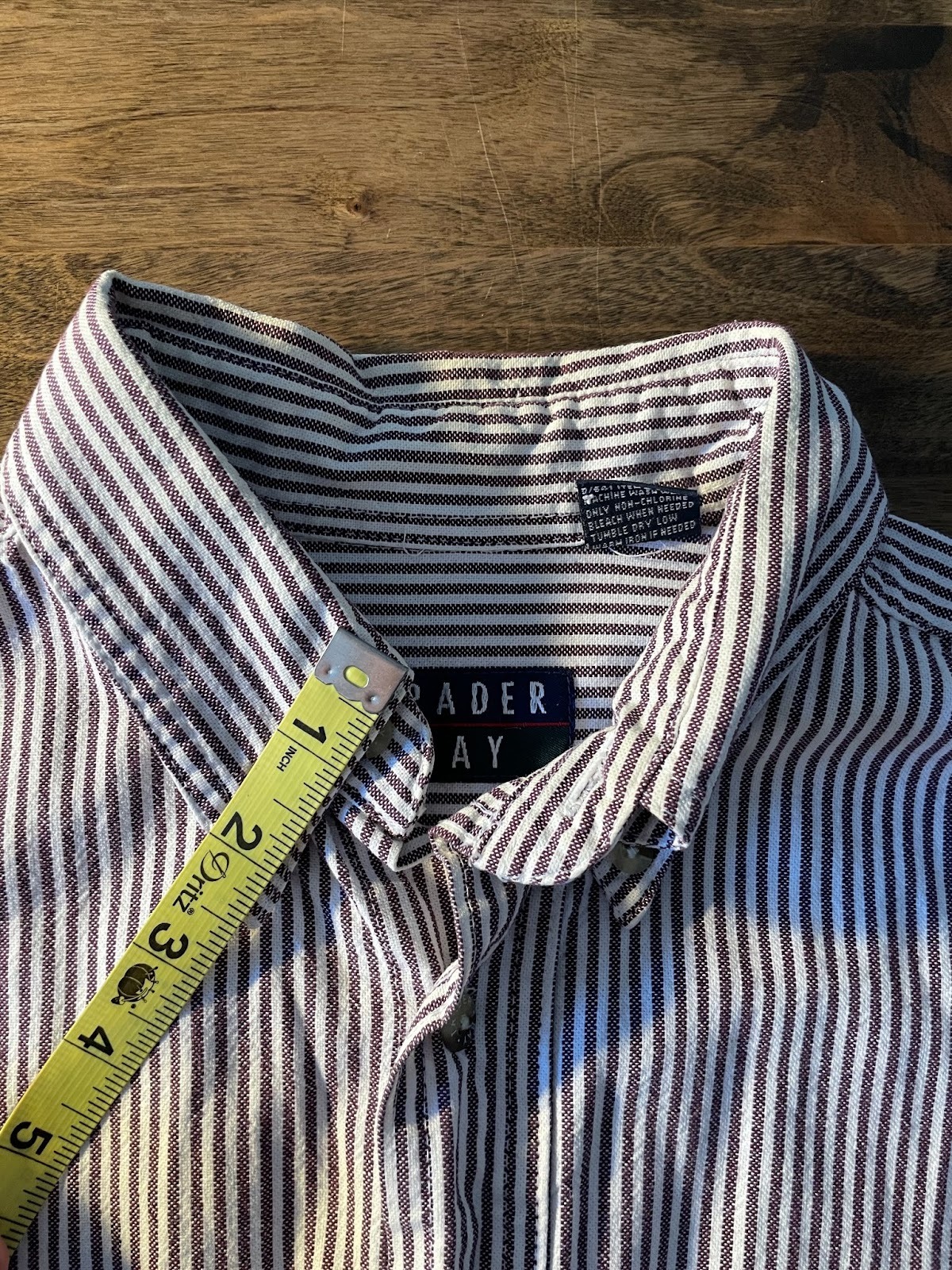
The Trader Bay logo is sewn into the collar, with the care instructions in a small fabric label to the right. Again, most labels are plastic, so this is a nice touch that you’ll see in vintage clothing and higher-end modern clothing.
Fabric
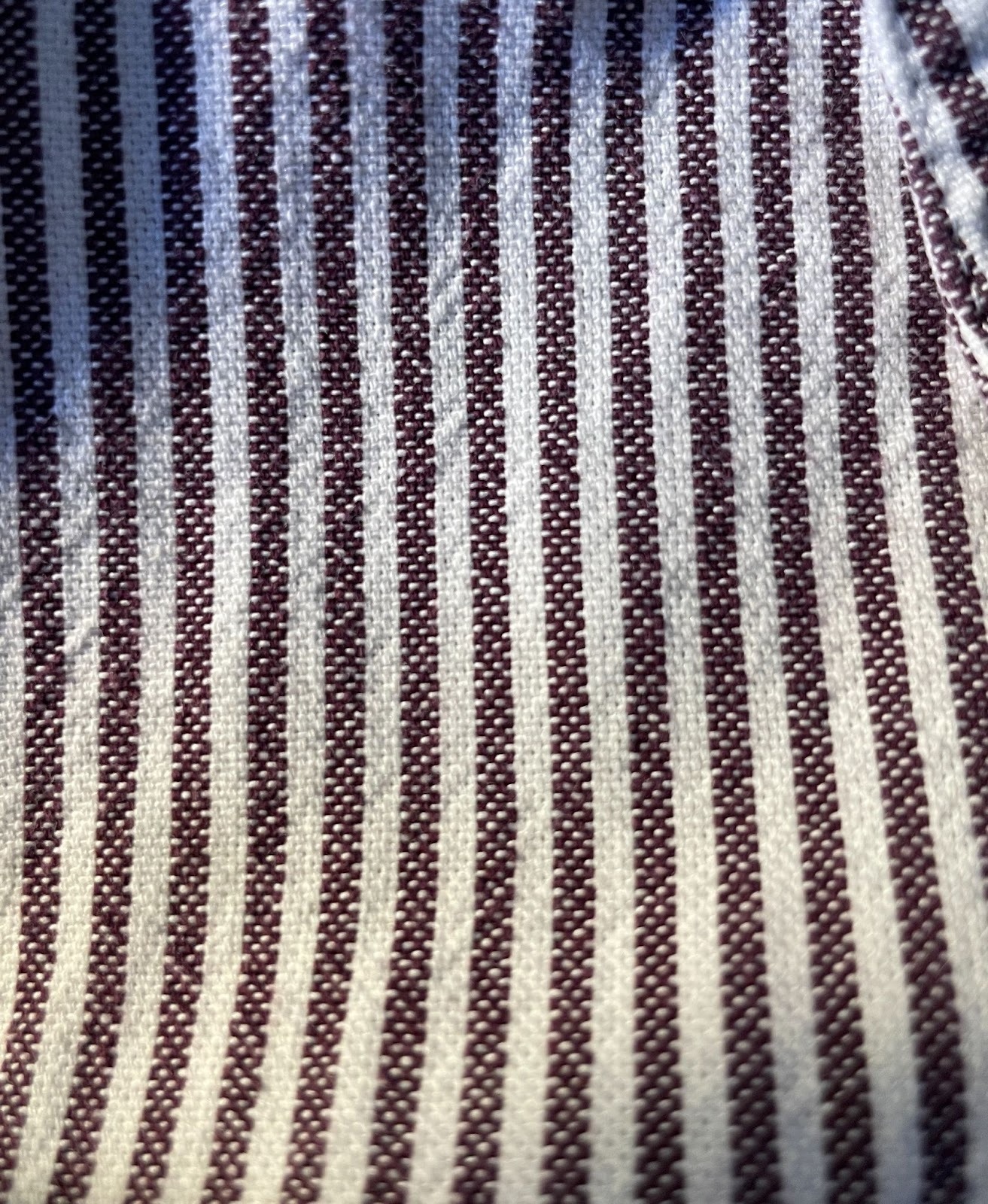
The fabric 100% cotton and thick, with a classic visible Oxford basket weave.
The weave itself is a bit looser and coarser than some of my higher-end thrifted shirts, like Lands’ End or J.Crew. For a department store shirt, it’s pretty decent and much better than some modern Oxford shirts with even looser weaves like Banana Republic.
Having worn this shirt a few times, I can vouch that the fabric is dense enough that I can wear a white undershirt underneath and no one would be the wiser. With 30+ years of wear, the fabric has broken in nicely, so I can imagine these would have been stiff brand new off the rack.
I should also mention that the pattern is woven, not printed. Again, for a mass-produced department store shirt, this is a very nice touch.
Buttons
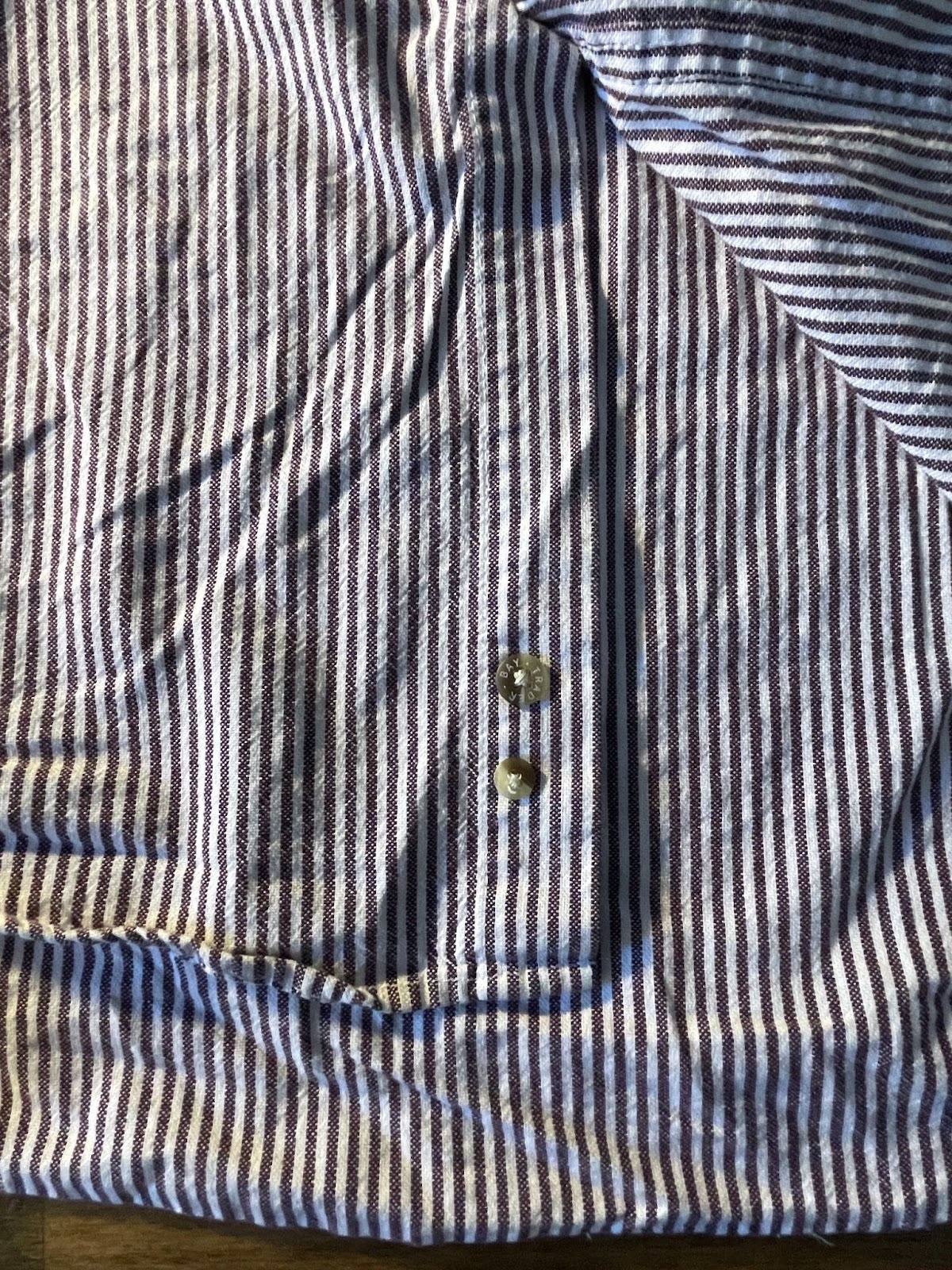
The buttons are plastic faux horn, but appear to be custom-made, or at least altered, as they have the Trader Bay name etched into them. Again, a nice touch for a mass-produced department store shirt where you’d expect every corner to be cut.
While the buttons have some care put into them, they are thin and light, so they’re not the highest quality.

Details and Extras
As far as extras go, this shirt is pretty bare bones, which is what you’d expect from a standard-issue department store shirt.
I’ll share photos later on, but the back features a box pleat and locker loop for some classic Ivy details, and there are extra buttons sewn into the bottom of the shirt:
Let’s go even deeper, though. I’ll share more about the construction of this shirt and how it compares to some of my higher-end pieces next.
Construction
I mentioned above my surprise that this shirt fit because it is labeled “Small” and I typically wear a “Medium” in most men’s shirts.
It’s definitely a “90s Small.” The shirt measures up pretty well with some of my modern-day shirts and is a nice middle-ground in my closet: not so big as some vintage shirts, but much roomier than your standard modern shirt, which skews slim.
Let’s start with the collar. The collar is unlined, with just under a 3” point length: enough to produce a respectable roll, though not quite as dramatic as vintage Brooks Brothers or Gant collars, which often push 3.25”–3.5” with a more generous tie space.
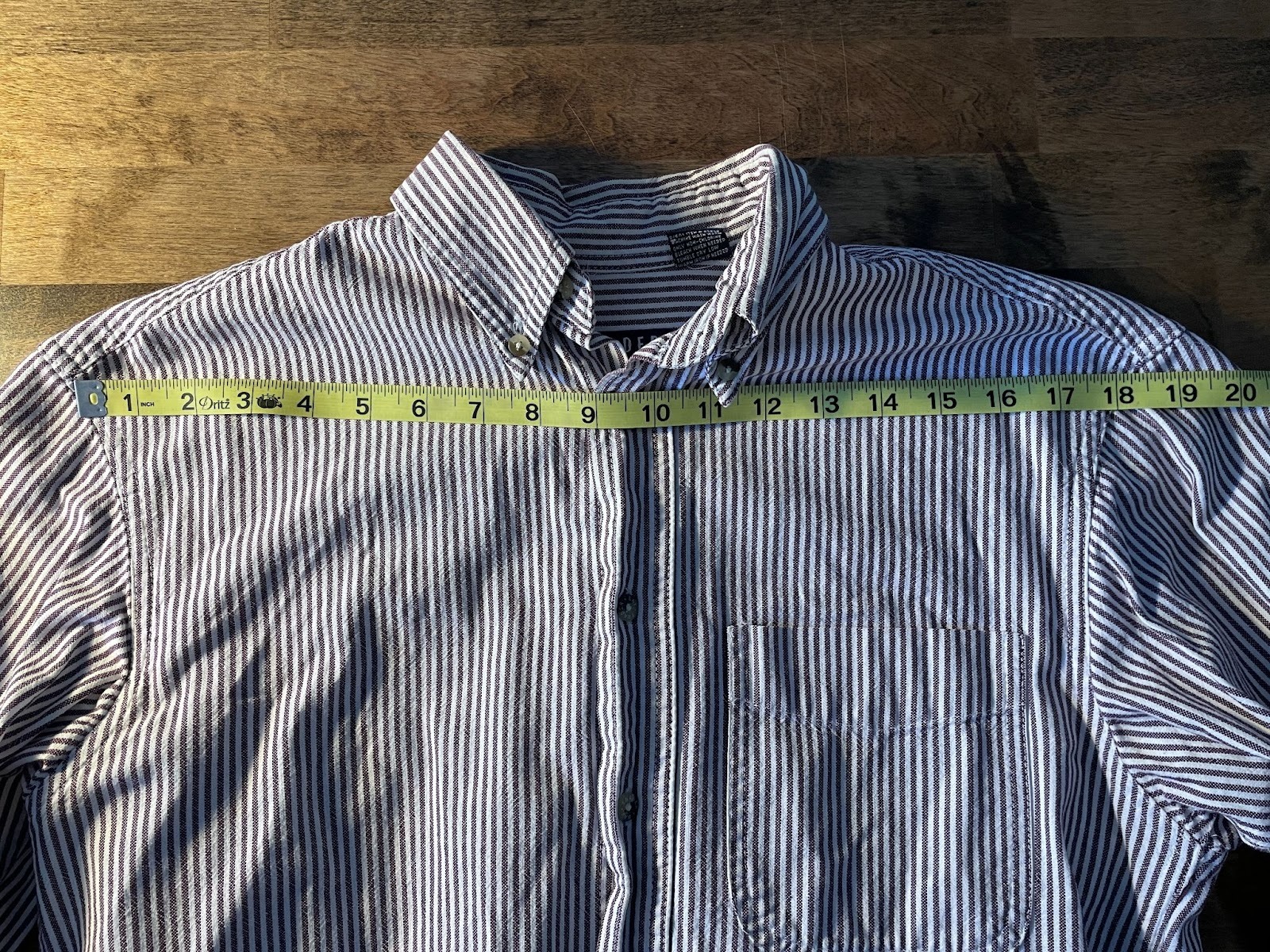
The shirt is nice and roomy in the shoulders at 18.5” between the seams, giving you the ample room you’d expect from a good vintage shirt. Again, the small is just perfect for me; a medium would be far too big.
Pit to pit, this shirt is about 21 inches. I typically wear a 40 in jackets, so this is a perfect fit for me in the chest.
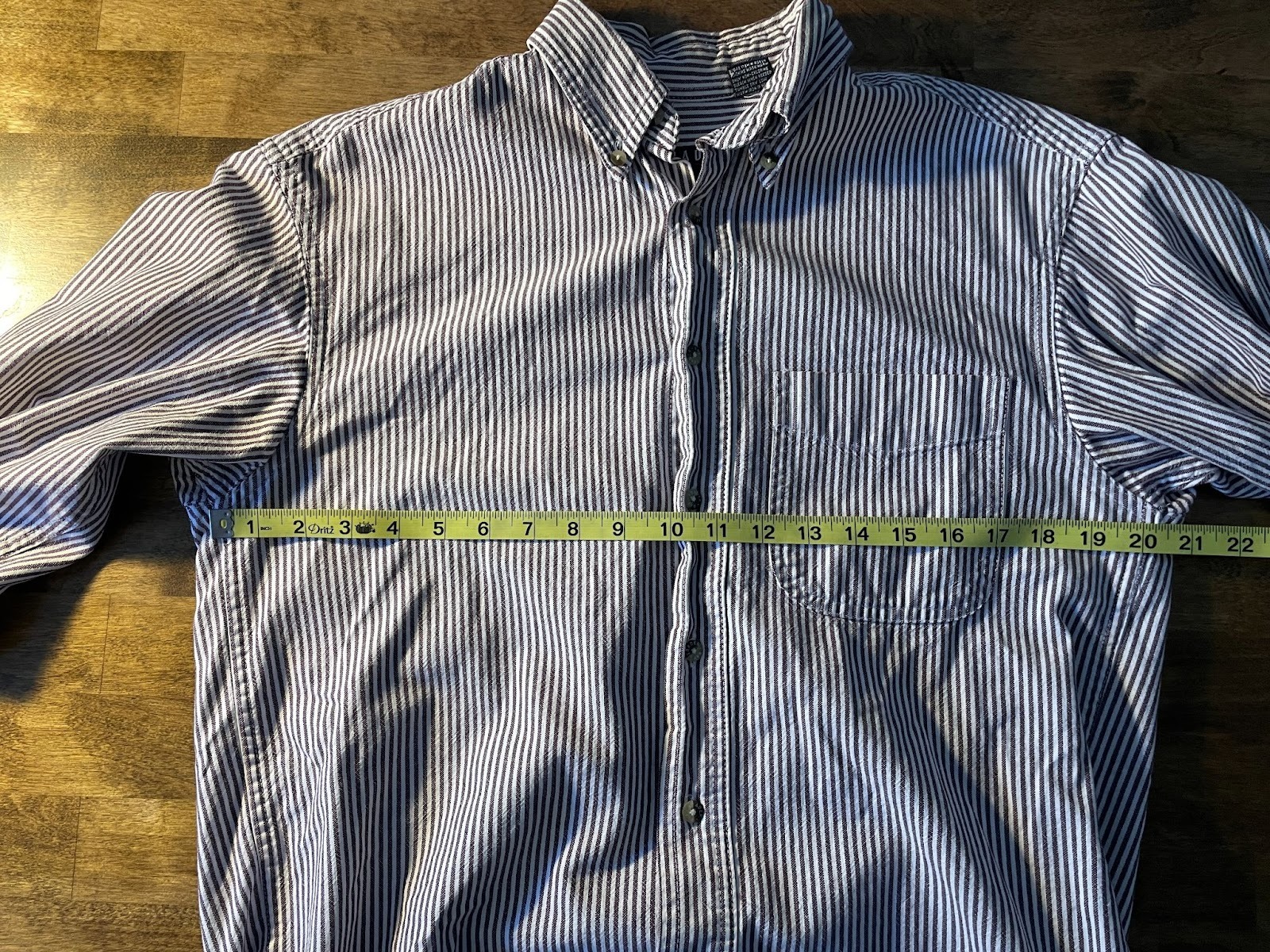
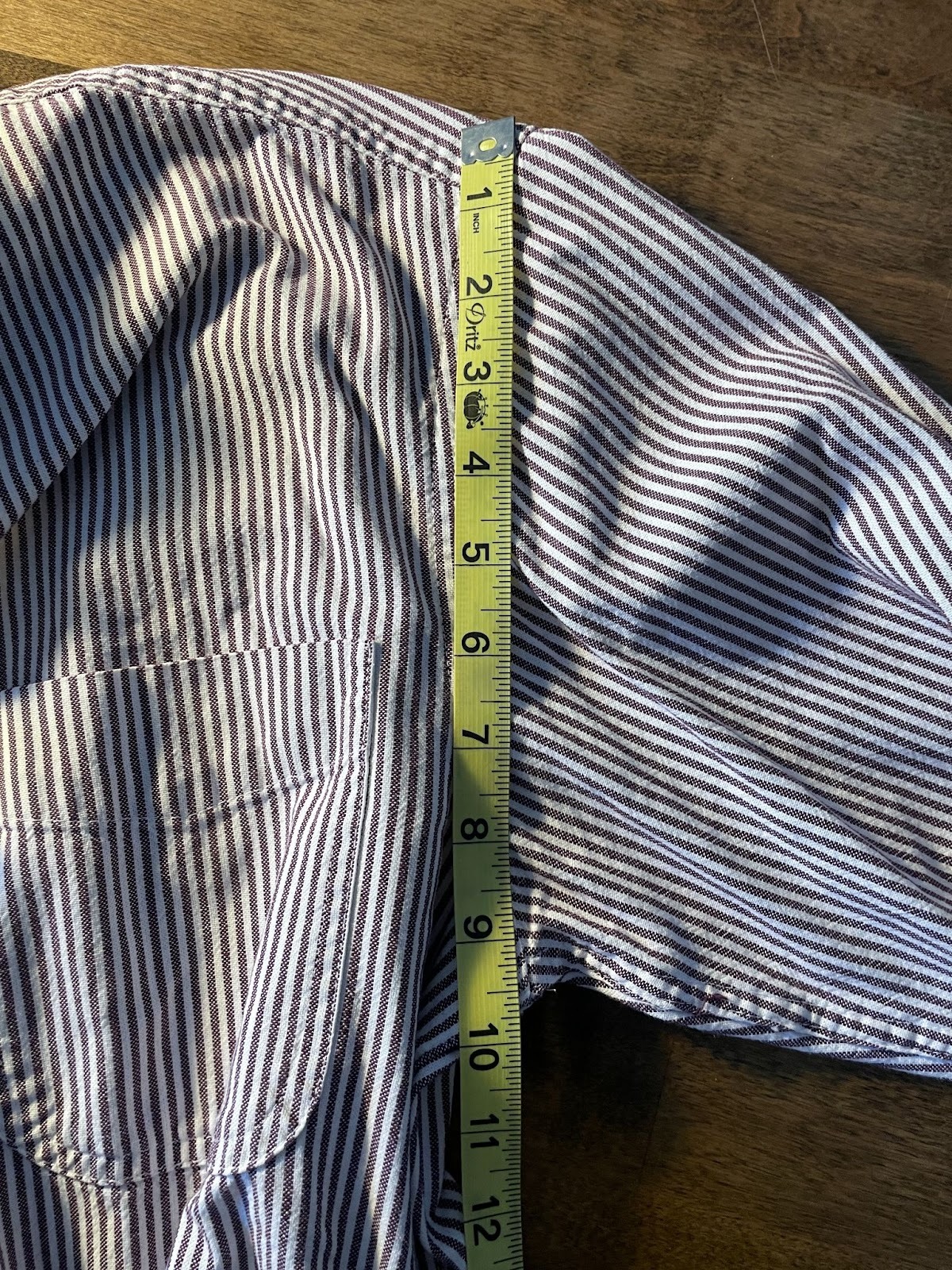
The arm holes are about 9.5” wide, so 19” in circumference. Funnily enough, this shirt has smaller arm holes than some of my other Oxford shirts, but due to a lower yoke in the back, the shirt has a boxier fit and allows for more bit more mobility.
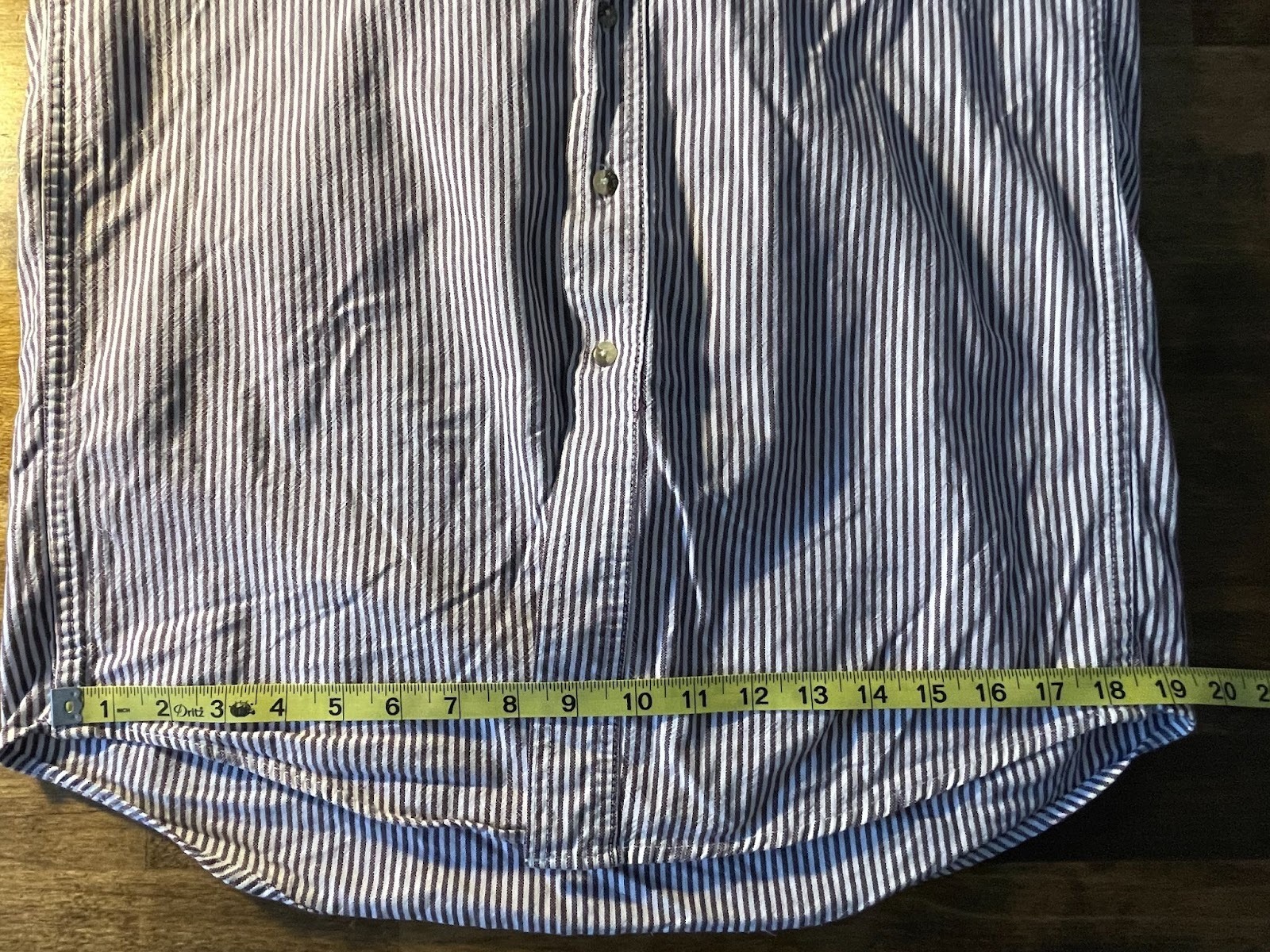
There is a slight taper from the chest in this shirt down to 18.5” at the bottom. Personally, I love this as opposed to a straight fit. I find straight fit shirts that fit my chest and shoulders leave a ton of extra material at the bottom, which bunches around my waist when tucking in.
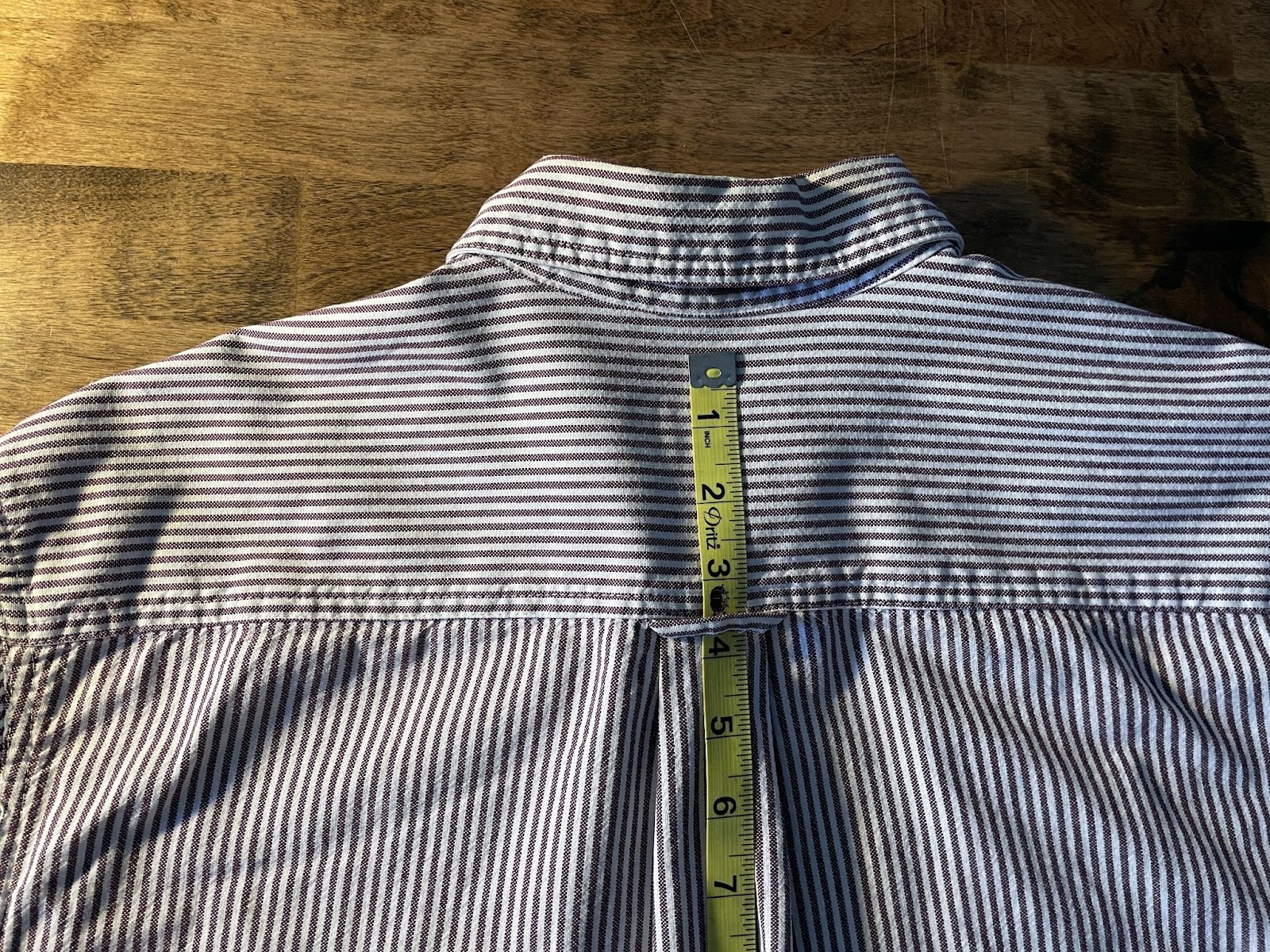
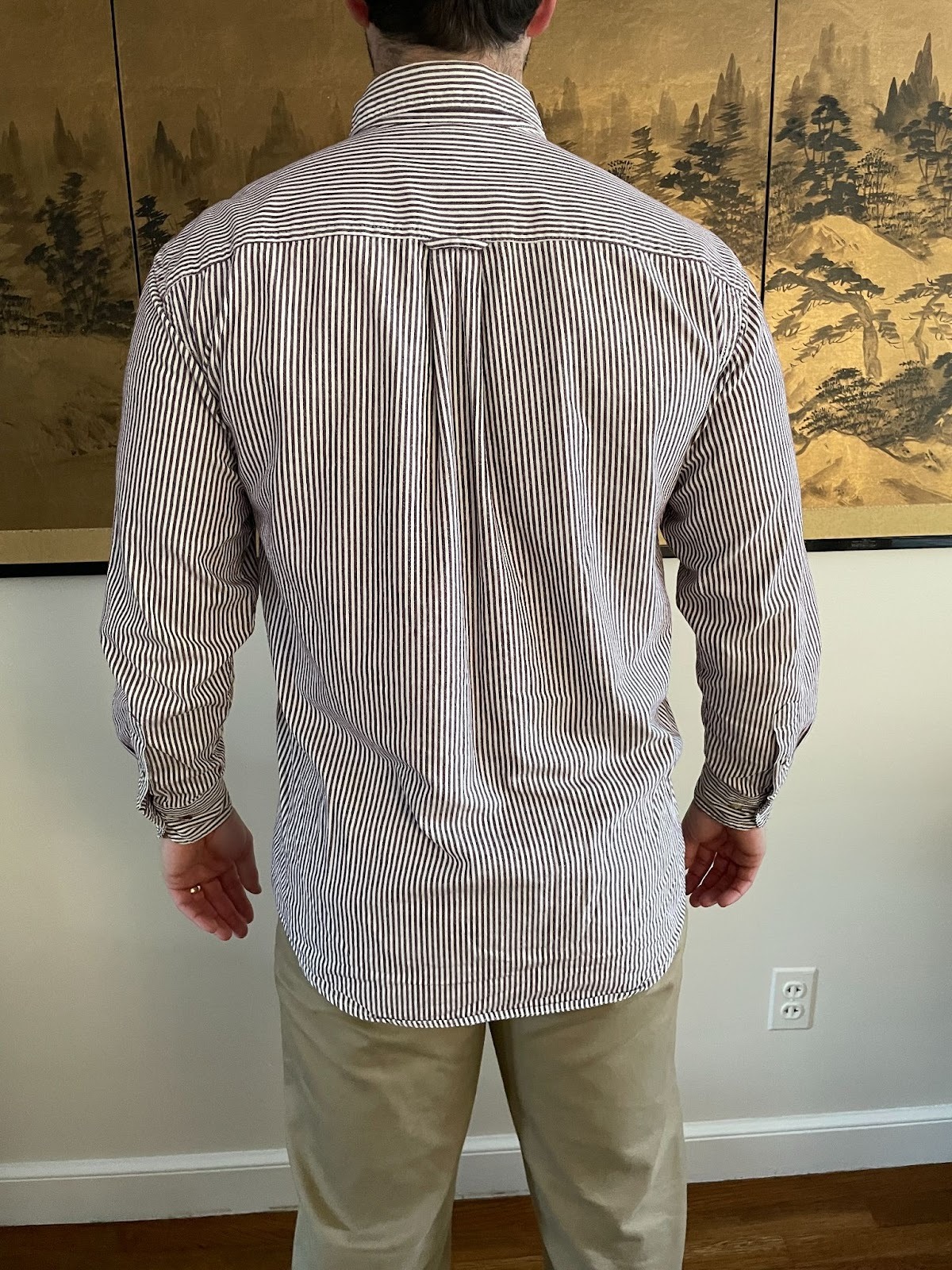
The shirt features a box pleat in the back and a locker-loop, and measures 17” across between the seams. One big difference between the Trader Bay cut of shirts and others is the lower yoke, with a 4” height. This is notably taller than the 2.5”–3” seen on traditional OCBDs. A taller yoke broadens the upper block and reduces the need for complex shaping, which makes it easier to mass-produce and also explains the pleasant mobility this shirt has despite the lower armhole. It’s no wonder, then, that by sizing down, I find the Trader Bay shirt fits decently well.
The shirt has a double pleat in the cuff, giving a bit more material for room in the forearms and arms. Newer shirts tend to have one pleat which can lead to a tighter arm and shoulder.
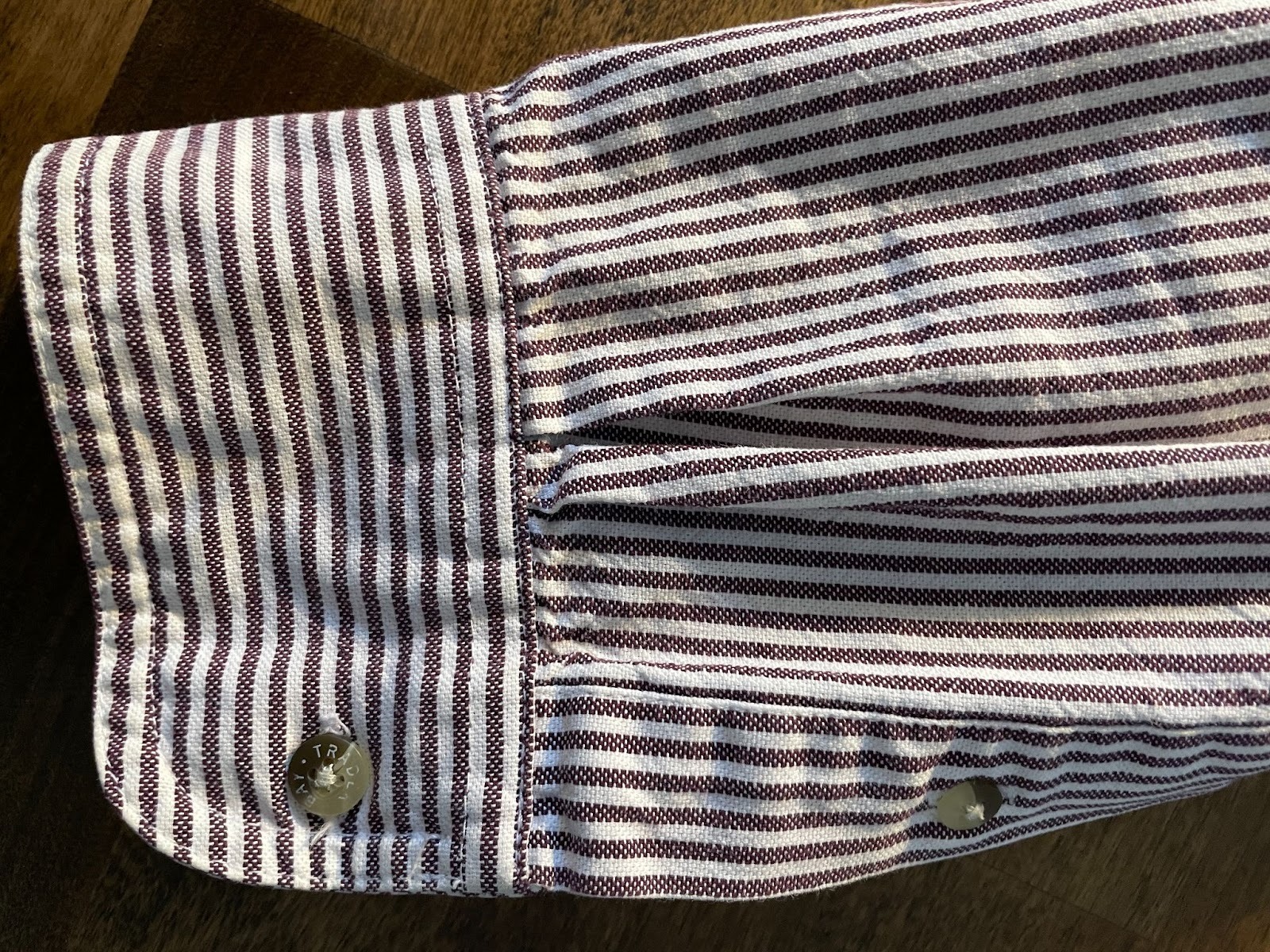
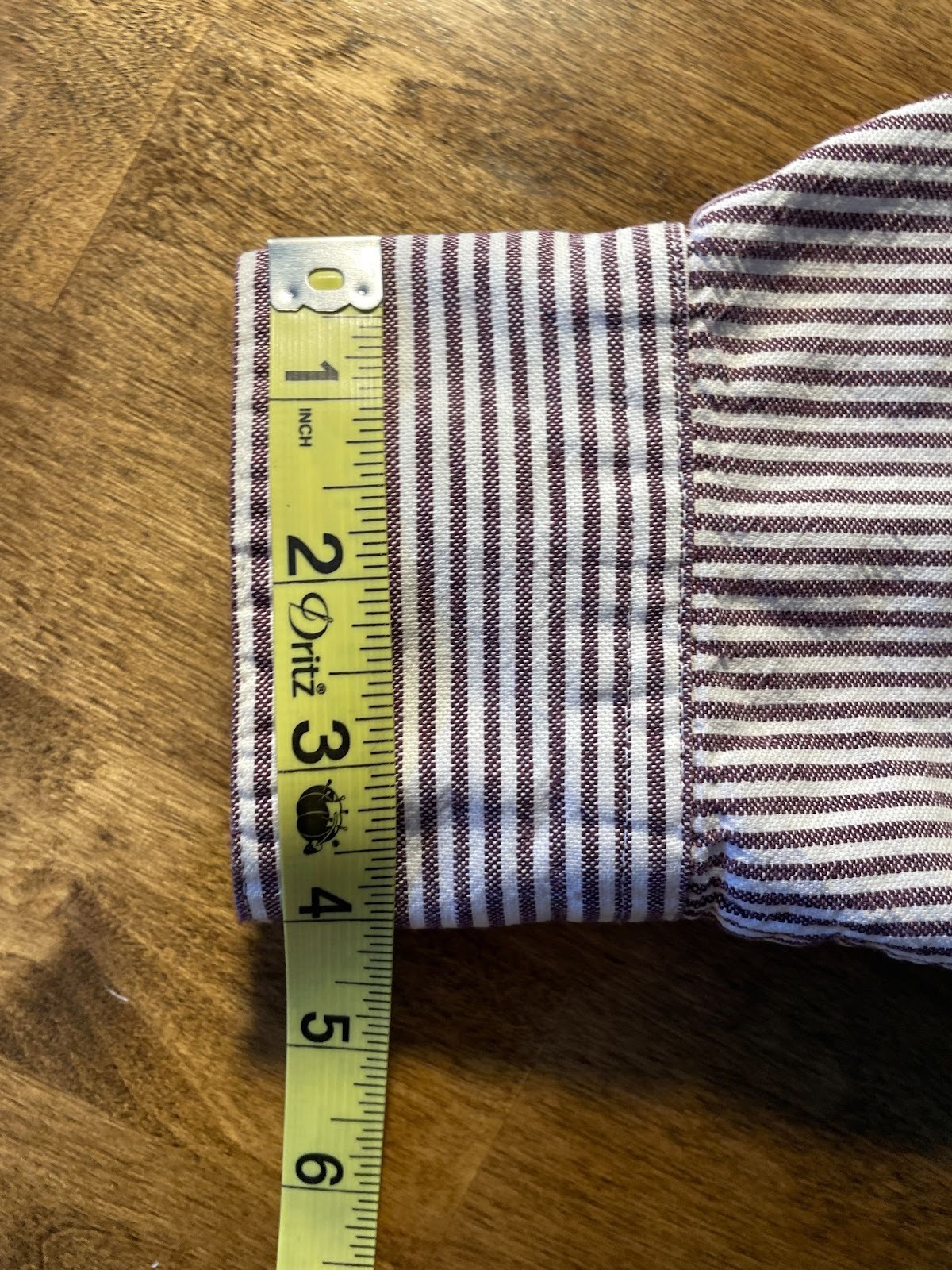
The cuffs measure about 4.25” across, 8.5” in circumference. I find I can easily slip my hands through the cuffs without unbuttoning them, which is nice.
Stitching
In a word: decent, but not spectacular. The stitching and seams in this shirt are highly visible, giving the shirt more of a “workwear” appearance than a refined Ivy. Don’t get me wrong, I like this shirt, but it’s not one I’d wear to a fancier event.
Compare it to the stitching in the J.Crew Vintage Oxford, which is much tidier and gives the shirt an overall dressier and more put-together appearance.
Weight
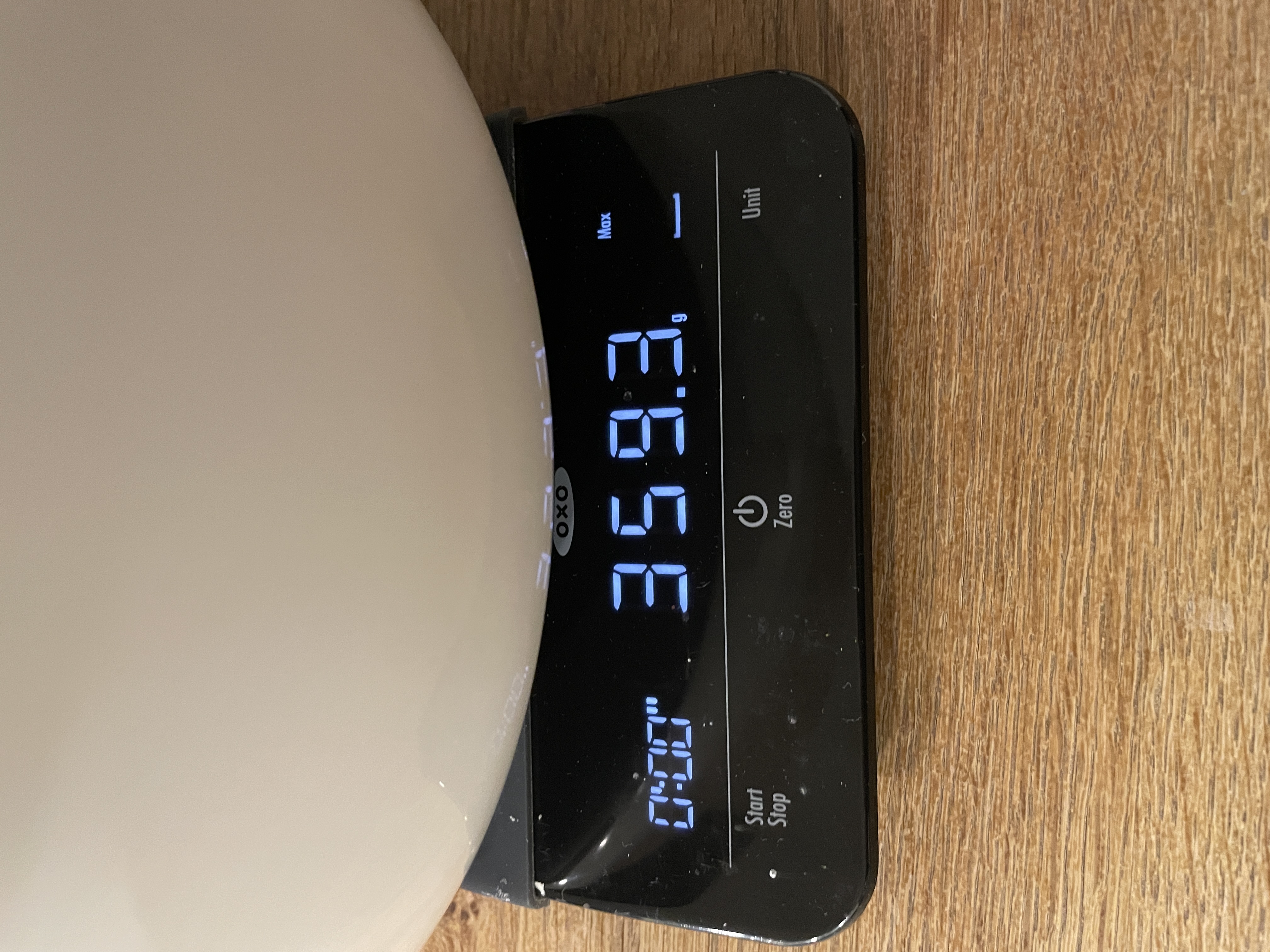
This shirt is an absolute beast. In the hand it's noticeably heavier, but I was quite surprised that it edged out my other shirts by 50+ grams! In all, the Trader Bay Oxford clocks in at 359.3 grams; definitely not a shirt I'd want to wear in the summer, though layered over an undershirt it's perfect for winter and fall.
Fit
Fit is going to be subjective, so bear the following in mind: I am 5’10” and about 175lbs on a good day. I like to lift weights, and would say I have fairly broad shoulders with a comparatively narrow waist. Typically, my jacket size is a 40, and my collar size is 15.5.
Here is the shirt untucked:
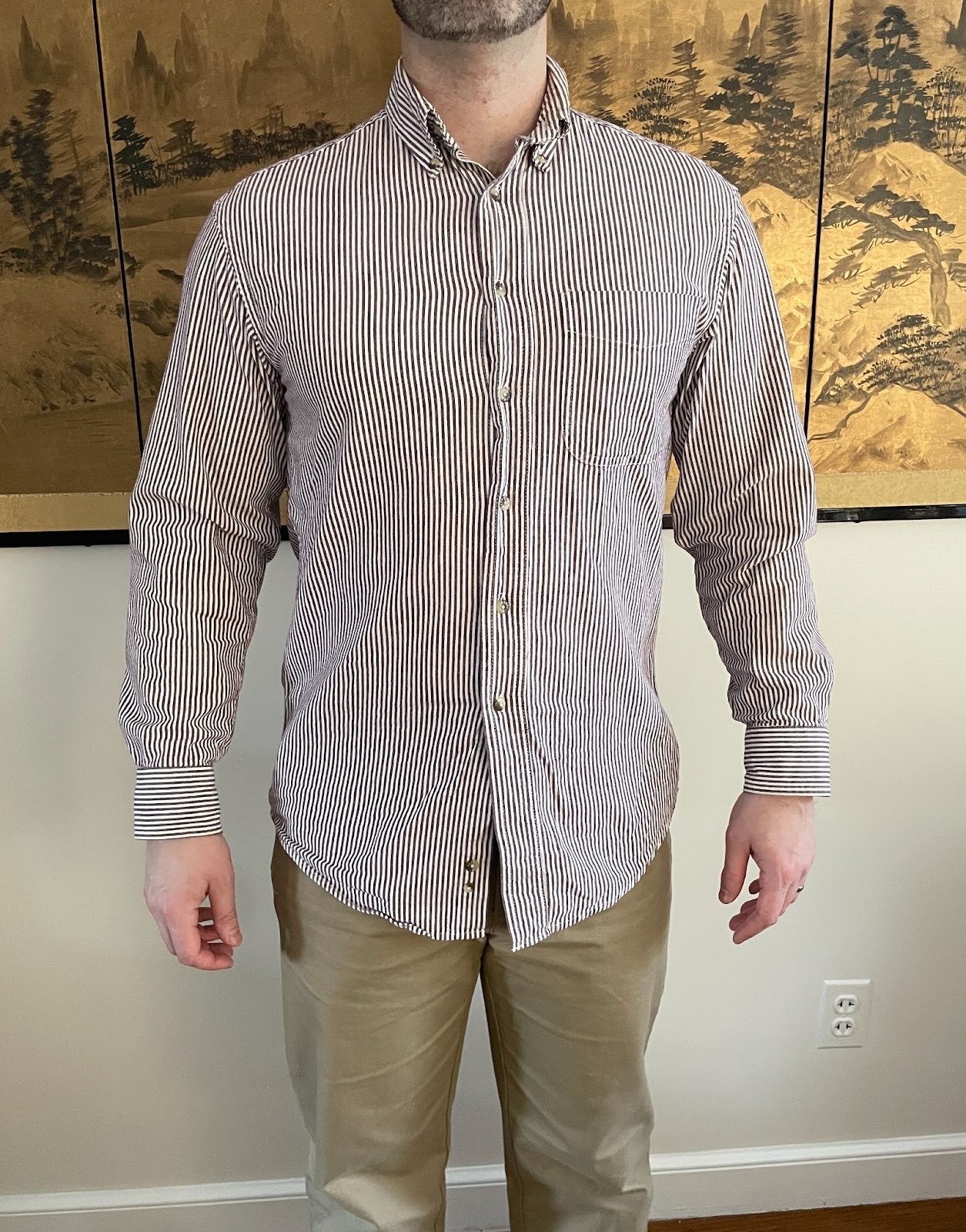
And here is the shirt tucked:
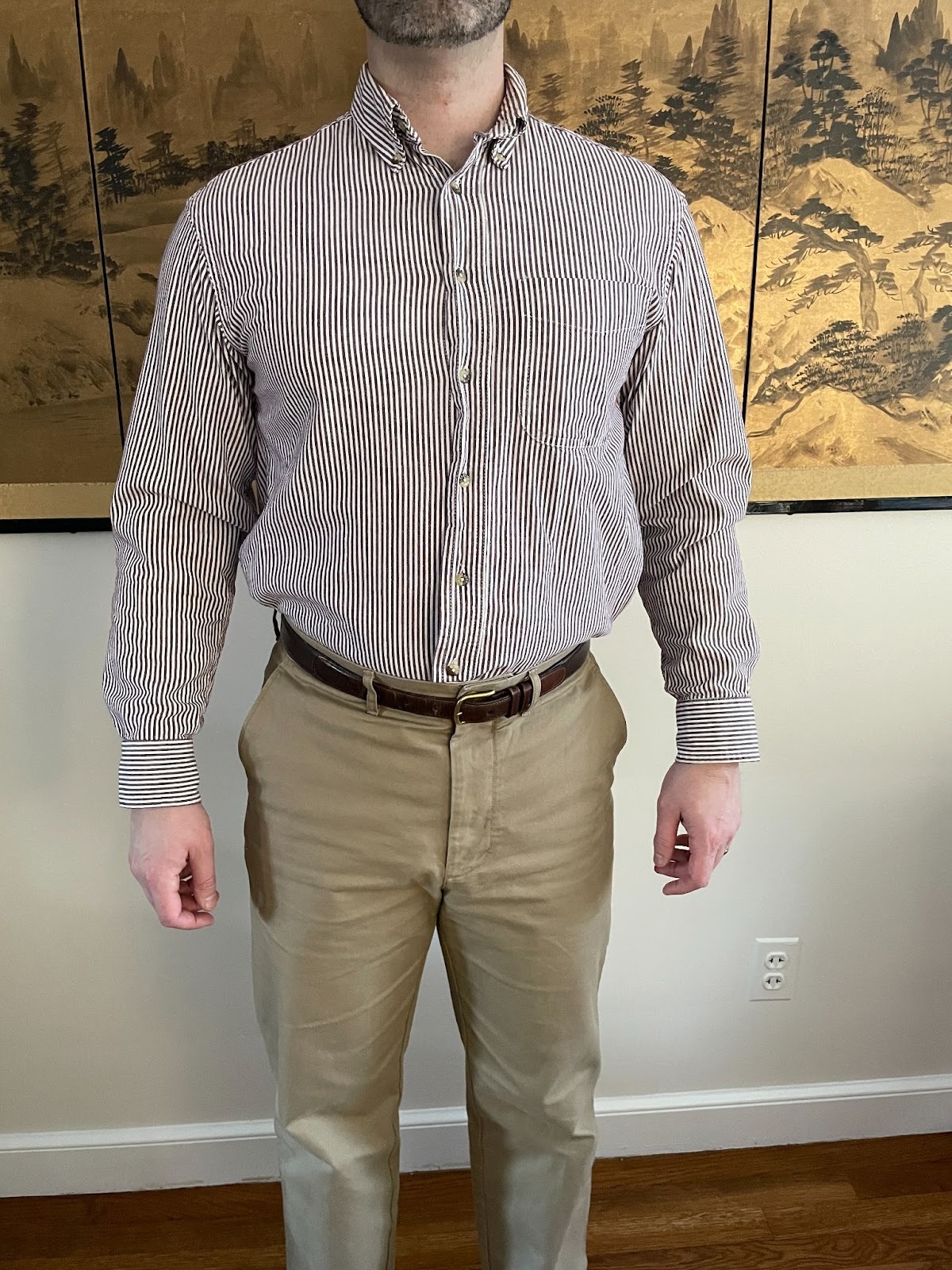
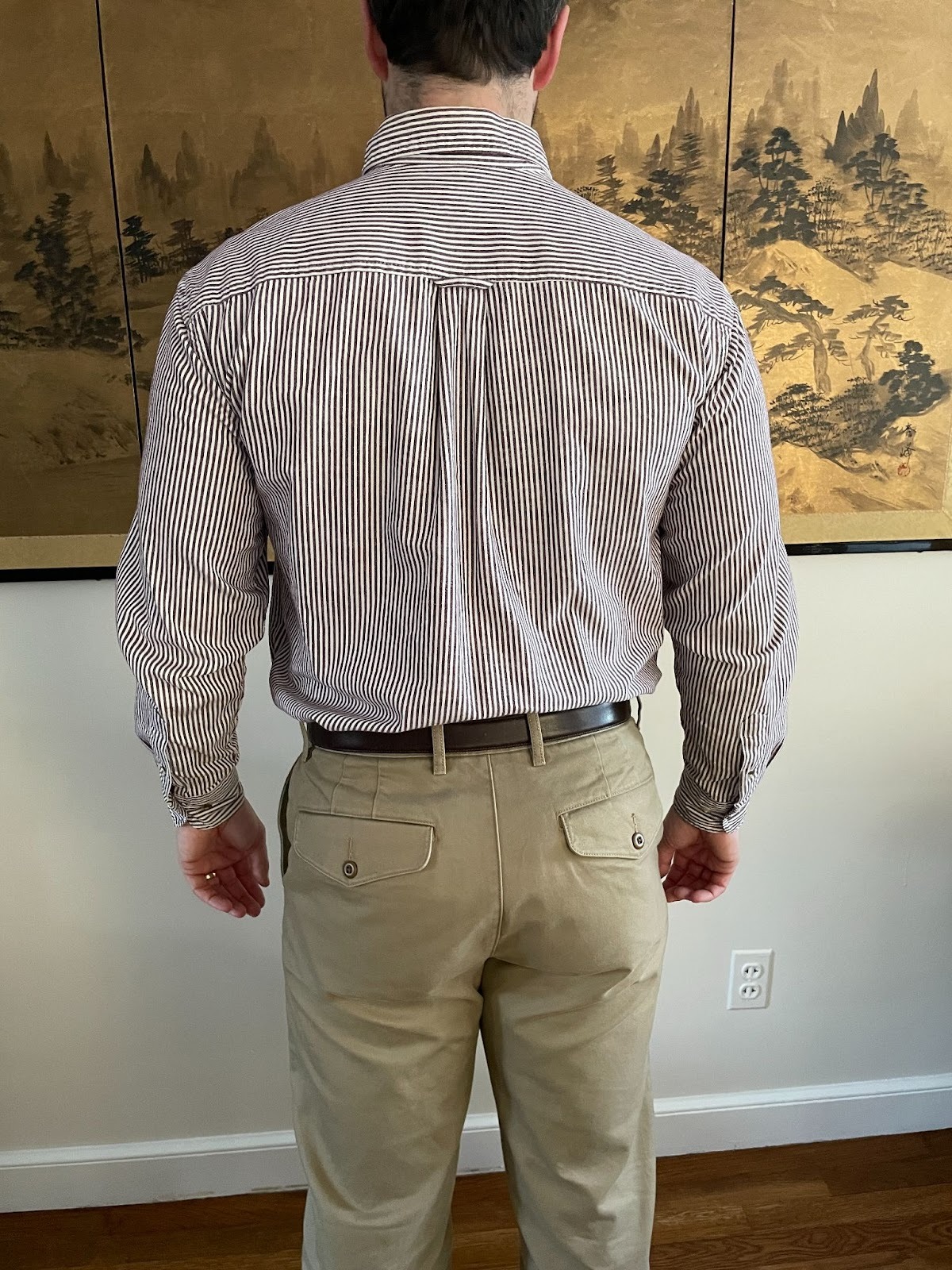
Of my Oxfords, I find this fits me pretty well. It’s roomy enough to fit my chest and shoulders, which tend to make slim-fitting shirts uncomfortable, but it’s not so big that I’m swimming in it.
Trader Bay Oxford Pros and Cons
We've covered a lot! I'll wrap things up here with a quick pros/cons list.
Pros
- Excellent mobility
- Burly fabric that clearly stood the test of time
- Reinforced stitching
- Ivy details like a larger collar, locker loop, and box pleat
- Nice taper at the bottom
Cons
- While the stitching is reinforced, the actual stitching itself is not great
- While it offers excellent mobility, the fit around the shoulders is not as great as that of a more refined shirt
- The fabric is decent, but definitely lower quality than higher-end shirts at the time
Are Trader Bay Oxford Shirts Good?
So here’s the million-dollar question (or, $15 question because you can get these on eBay for pretty cheap): Are the Trader Bay Oxford shirts worth it?
For $10-$20 on eBay? Sure. These were mass-produced department store shirts sold to working professionals; they are just as good now as they were in the 1990s. There certainly are and were better shirts, but if I’m being honest, this shirt blows a lot of brand-new Oxford shirts out of the water (looking at you, J.Crew Broken-In Oxford).
The shirt is durable, decently made, and clearly lasted 30+ years, so who’s to say it can’t last another 10 or 20? Even if I bought it for $40, that’s well worth the money in my opinion. That said, it's far from the perfect Oxford shirt. I think Trader Bay got a lot of things right, but the lower-quality stitching and the less-refined pattern for the yoke and the back are knocks against it that prevent me from making this the sole model of shirt in my closet.